Image Management


BECOMING A PRODUCER
After two years of paying my dues at C-SPAN and a short stint at CNN, I was at a career crossroads. I had the technical chops to handle practically any assignment, but I wanted more creative involvement in the production process. In the world of production, as accurate now as it was then, techs do “tech-stuff” and Producers and Directors make the creative decisions. The TV business even makes a distinction during the budgeting process, referring to “Above the Line” and “Below the Line” personnel working on a project.
It doesn’t take a Brain Surgeon to figure out there’s more money and creative freedom above the line.
It was during this period that I met a Producer from New York who was working for a company called Image Management. She was trying to finish a documentary about the great MGM Hotel fire that killed 85 people in Las Vegas. She was completely lost and had no idea how to put things together. A friend connected us, and the next thing you know, I’m doing the finishing on this PBS documentary titled Chemistry of Fire. The first thing I had to do was finish the first rough cut, we also called this “off-line” editing. Offline was the real meat-and-potatoes stuff, where you identified the final clips from each shoot and assembled all the main content and B-roll to get to a rough cut. An offline editor would assemble several rough cuts before finishing the program with effects and color grading. Client approvals were given with each new cut until all of the content lined up and made sense. The primary purpose of an offline rough cut was to produce an EDL, or edit decision list. At 300 dollars plus an hour, it was imperative that when the time came for the final online assembly, you were prepared. Most post facilities would allocate a minimum of 3 synced tape machines to use your in and out points referenced in the EDL. The goal was to use the post facility purely for placing transitions between sequences and maybe some digital video effects for extra polish.
I was handed a bunch of ¾” b-roll, about 25 tapes with visible time-code burned-in. Using a pair of rented Sony U-Matic machines, I worked day and night for approximately 6 weeks out of a studio/loft owned by a prominent D.C. Photographer, Richard Basch. I used Richard’s space because he was friends with the Producer. I don’t remember whether Richard had any connection to the project beyond providing a spot to edit. I do remember the loft was located on Tony, Dupont Circle, right above an incredible Tex-Mex restaurant. Within 6 weeks, the rough cut was finished and approved, then mastered at KLM, a local post facility. I made several visits to Image Management to check in with the Producer and the Producer’s friend, Jim Robinson. Jim hired me once the doc was finished.
I enjoyed working for Jim Robinson, he gave me an office with a nice desk, a set of business cards and a title. “Holy shit”, I thought to myself, for the first time in my career, I felt like a Big Shot. Jim treated me as an equal and while the pay was barely enough to sustain my meager lifestyle, he never talked down to me and was always looking for new opportunities to grow the company. So with the help of our trusted intern Dave Kaplan (who later became a staff member), I produced and directed many different types of programs at Image Management.
Jim Robinson PresidentWE HAD THE TIME OF OUR LIVES
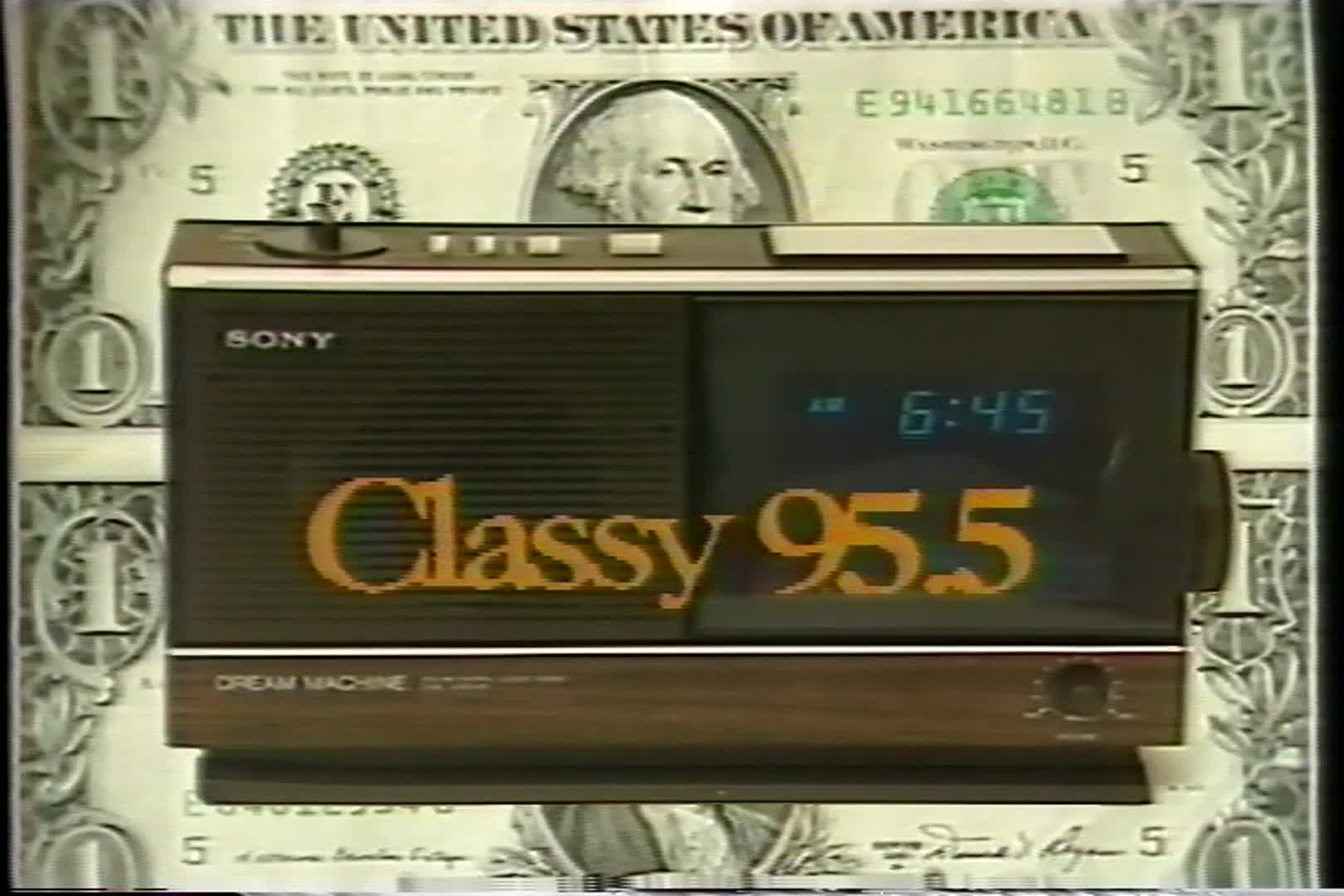
Recollections on my time with Jim Robinson and Dave KaplanAt IMAGE MANAGEMENT, I produced and directed many real estate projects, as well as a weekly Sunday morning prayer program called Successful Living with Pastors Martha and Alvin Jones. We were all quite young and passionate about what we did. I also made several commercials, including my one and only 10-second spot for Classy 95. Back then, 10-second commercials were rare, possibly because people had longer attention spans. Today, 60-second commercials are almost nonexistent, and even a 30-second spot feels too lengthy. You could say we were ahead of our time. The Classy 95 (WCLY) 10-second spot stands out for me because it was the first commercial, aired in D.C., to use the Quantel Mirage digital video effects generator. You can sum up that amazing machine in three simple words: “Page turn effect.” Costing $500,000, only a few facilities could afford one, but Dave and I had to find a way to incorporate it into one of our productions. So, we took it out for a test on WCLY’s 10-second spots.
TO stay on budget. We drove to New York City, home of Broadway Video. Broadway was the only facility on the East Coast to own a Mirage. With Phil Collins (whom we later did a PSA with in NYC) blasting on cassette, we jumped on the interstate and headed for the next four and a half hours to the Big Apple. Arriving in the late afternoon, Broadway Video was right in the heart of Times Square. Since it was owned by Saturday Night Live producer Lorne Michaels, we wondered if he might be around. At that time, Broadway Video was regarded by Post and Millimeter magazine as the world’s best spot for post-production, graphics, and special effects. So Dave and I knew we’d have a good time, no matter what. Looking back, I’m not sure we really needed to make such a long trip, especially for a ten-second spot that comes and goes in the blink of an eye. We were probably more curious about Broadway Video and the Mirage, or maybe we just needed a road trip and an adventure. Either way, WCLY gave us a reason to hit the road and have some fun. Of course, we shot some B-roll along the way and in Times Square — isn’t that what every Vidiot does? Hey, you never know, right? The spot I produced and directed on 35mm film for the Wellington Hotel is another I’ll never forget. That spot almost cost me my job — you can read more about it below. You can find this story and others about each video in the excerpts beneath each one. Then there was the Amtrak TLS video shot in Philly. I’ll be forever grateful to the freelance crew that worked with Dave and me on that project. The TLS was a massive locomotive retrofitted to pick up old wooden railroad ties and replace them with new track. The track-laying system performed this amazing feat in line with the 50-ton train that kept moving, scooping, and laying track nonstop. My team was brave, taking handheld shots from high and low angles, including with a Fisher Dolly running in reverse. A few final notes on my time at Image Management: Jim got me a chance to produce a package of on-air graphics for a new cable startup, the Discovery Channel. We designed the package to be flexible so they could promote individual shows or present a full schedule for the week or month. Discovery was starting out with a small budget, as it was their first attempt at on-air branding, but they turned out pretty well, I’d say. Joe Fries, a vice president at the Learning Channel (later renamed TLC), joined Image Management about six months after I started. Joe and I took a trip out west after he settled in to attend one of the first NCTA (National Cable Television Association) conventions in Vegas. He introduced me to some old contacts at the Learning Channel to drum up new business for Jim. But Vegas and Joe Fries didn’t mix well. He ended up losing every penny he and I had — a sign of worse things to come. Dave Kaplan went from intern to employee number three. His goal before interning was to return to A.U. He had taken some time off to gain practical video production skills. I like to think I was a good mentor, but he already had most of the skills when I joined. Once Dave got his first Ikegami HL-79E, goodbye A.U., hello Hollywood. Dave was born to make videos — much to his parents’ chagrin. The hours were long, and we often stayed all night at the office. The pay wasn’t making me rich, but I was having a lot of fun. My goal of becoming a producer/director officially started at Image Management — thanks, Jim. I made a good friend in Dave Kaplan, who worked just as hard on the pair of Sony U-Matics as I did. Jim Robinson went on to become president of ABC Radio Networks and is now a talent agent for many well-known radio personalities. Ultimately, Image Management was the most fun I ever had making videos. I became a filmmaker with the freedom to experiment and try new things. I developed skills that served me well in the future. I'm forever grateful to Jim Robinson for letting me play a role in his company.